

Imagine that you’re in the middle of a big DIY project or setting up power tools outside when your extension cord stops working or gets too hot. Frustrating, right? The simple reason is that not all extension cords are made to handle heavy loads.
In this situation, a 12-gauge extension cord comes in handy. It’s the best choice for jobs that require a lot of power because it’s robust, durable, and safe.
This article talks about what a 12-gauge extension cord is, why it’s great for heavy-duty power needs, and why it’s so dependable.
What is a 12 Gauge Extension Cord?
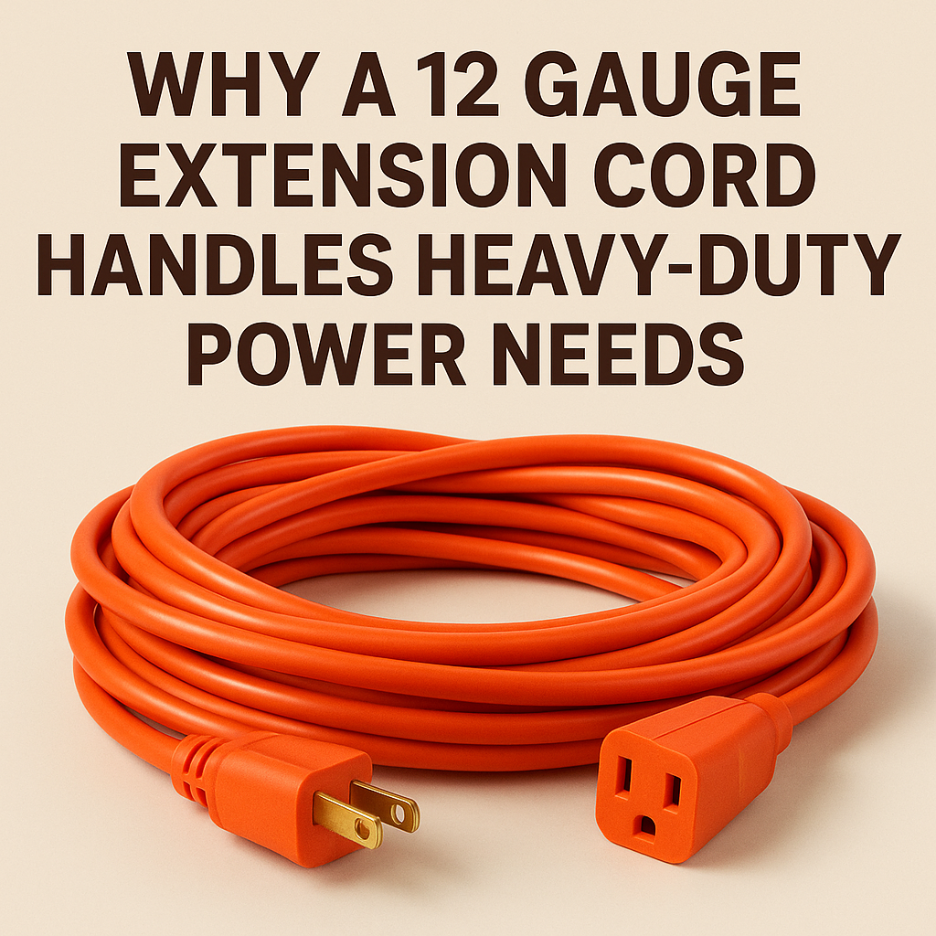
A 12-gauge extension cord is one with wires measuring 12 AWG (American Wire Gauge). The number on the gauge indicates how thick the wire is; thicker wires have lower numbers. 12-gauge cables can carry more current without getting too hot than thinner wires like 14- or 16-gauge.
They are often used in workshops, on construction sites, and outside, where heavy-duty appliances and power tools need a steady, safe power supply.

Why A 12 Gauge Extension Cord Handles Heavy-Duty Power Needs
Tools, appliances, or machines that use a lot of electricity all the time are what we mean by “heavy-duty power.” Heavy-duty cords can handle these loads without overheating, losing power, or breaking down quickly.
The 12-gauge extension cord offers many features that make it ideal for these demanding jobs. Let’s find out why.
1. Thicker Wire for Maximum Power
The most important part of a 12-gauge cord is the thick wire. The 12 AWG wire can handle more amps than the 14 or 16 AWG wire. This means that it won’t get too hot when you use tools that need a lot of power, like generators, air compressors, and table saws.
Thicker wires also reduce voltage drop, so your devices receive the same amount of power even when they are far apart.
Think of it this way: a thin wire is like a small pipe. It will have trouble or even leak if you try to push a lot of water through it.
The 12-gauge cord is the wider one and can safely handle more current: professional contractors, electricians, and serious DIYers all like 12-gauge cords for tough jobs.

2. Durable Insulation for Safety and Longevity
Another essential thing is durable insulation. Most of the time, a 12-gauge cord is covered with thick, high-quality materials such as PVC or rubber to protect it from scratches, cuts, and weather damage.
This is important when cords are used in workshops, pulled across rough surfaces, or wrapped around tools, because they are likely to wear out.
Insulation that lasts protects both the wire and you. It reduces the risk of shock, sparking, or other problems that can occur if the wire breaks. In short, the cord is made to last longer and keep heavy-duty power jobs safe.
3. High Ampacity and Heavy Load Handling
Ampacity is how much current a wire can safely carry. A 12-gauge extension cord can handle a lot of amps, so it can safely power tools and appliances that draw a lot of power without overheating or tripping circuits.
A standard 12-gauge cord can safely handle 15 to 20 amps for most heavy-duty home and business tools.
This feature also helps keep voltage drop to a minimum, even with a long cord. For example, you need a steady voltage when using a generator, power drill, or circular saw to keep your tools from working poorly or even breaking. A 12-gauge cord delivers that reliability consistently.
4. Sturdy Plugs and Connectors
Heavy-duty cords also feature powerful plugs and connectors. The plugs are designed to withstand frequent plugging and unplugging, resist sparks, and maintain a strong connection.
Cheap cords can break or come loose after a few uses. However, 12-gauge cords are built to last and withstand harsh conditions, so your tools stay powered and your work doesn’t stop.
5. Certified for Reliability
Many 12-gauge extension cords are UL-rated or certified as heavy-duty. This means that they have been put through their paces in challenging situations to see if they are safe and work well.
You can be sure the cord can handle heavy-duty power without compromising your safety, as it has been certified to meet industry standards.

Tips for Getting the Most from Your 12-Gauge Cord
To get the most use out of your 12-gauge cord and make it last as long as possible:
- Choose the Right Length: Longer cords can slightly reduce voltage, so pick a length that works for you.
- Check how many amps the device uses: The total load of all devices plugged in should not exceed the cord’s ampacity.
- To keep things from getting knotted and kinked, store them correctly. Coil the cord loosely and keep it away from sharp edges.
- Check it often for cuts, wear, or broken plugs to make sure it works safely.
These easy tips will help your cord keep delivering heavy-duty power safely and effectively.
Power You Can Count On
Think about this: your workshop tools work perfectly, your generator powers outdoor tools without problems, and you don’t have to worry about your cord getting too hot or getting shocked.
A 12-gauge extension cord can do that because it has a thicker wire, strong connectors, long-lasting insulation, and a high ampacity. This cord gives you peace of mind and steady performance when you need a lot of power.
Pick the right one and use it right, and your projects will go smoothly.
