

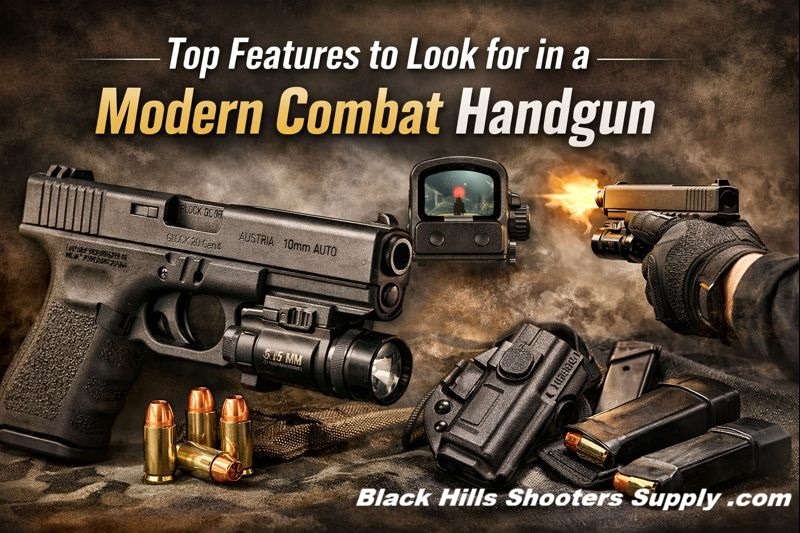
Choosing the right combat handgun requires understanding what separates reliable duty pistols from standard firearms. Whether you’re a law enforcement professional, military personnel, or serious civilian shooter, knowing which features matter most can make all the difference. For those exploring proven options, the glock 20 gen 4 for sale at Black Hills Shooters Supply offers a solid starting point for evaluating modern combat pistol standards.
Understanding Modern Combat Handguns
Combat handguns are purpose-built firearms designed to perform under extreme conditions where failure is not an option. Unlike recreational or competition pistols, these weapons prioritize reliability, durability, and ease of use in high-stress situations. They must function flawlessly whether exposed to mud, sand, water, or extreme temperatures.
The term “combat handgun” typically refers to semi-automatic pistols chambered in effective defensive calibers with sufficient magazine capacity for extended engagements. These firearms feature robust construction, simple operating systems, and minimal external controls that could snag on clothing or equipment. Modern designs incorporate decades of battlefield experience and law enforcement feedback.
When evaluating combat handguns, focus on proven track records rather than marketing claims. Military and police adoption often indicates a weapon has passed rigorous testing protocols. Look for models with documented performance in actual defensive situations, not just controlled range environments.
Frame Size, Weight, and Balance
The frame dimensions directly impact how well you can control and conceal a combat handgun. Full-size frames provide longer sight radius for accuracy and more surface area for grip, which helps manage recoil during rapid fire. Mid-size frames offer compromises between shootability and portability, while compact frames sacrifice some control for easier concealment.
Weight distribution affects both carry comfort and shooting performance. Heavier pistols absorb recoil better but become burdensome during extended carry periods. Modern polymer frames reduce overall weight without sacrificing structural integrity. Steel-framed pistols offer superior recoil management but add considerable weight that impacts all-day carry.
Balance refers to how weight distributes between the grip and slide. Well-balanced handguns point naturally and return to target quickly after each shot. Poor balance causes muzzle flip and slower follow-up shots. Pick up multiple models to assess how they feel in your hand. The right combat handgun should feel like a natural extension of your arm, not an awkward tool you’re fighting to control.
Caliber, Capacity, and Recoil Control
Caliber selection represents one of the most debated aspects of combat handgun choice. The 10mm Auto cartridge delivers exceptional stopping power with flat trajectory and deep penetration, making it ideal for situations requiring barrier penetration or defense against large threats. This powerful round outperforms 9mm and .45 ACP in energy delivery while maintaining manageable recoil in properly designed platforms.
Magazine capacity determines how many rounds you have available before reloading becomes necessary. Standard capacity magazines holding 15-17 rounds provide adequate ammunition for most defensive scenarios. Extended magazines increase round count but add bulk and weight. Consider whether your role requires maximum capacity or if standard magazines suffice for your mission profile.
Recoil management depends on multiple factors including caliber power, pistol weight, grip texture, and frame geometry. Effective recoil control allows faster accurate follow-up shots, which proves critical in defensive engagements. Test fire different models to evaluate how quickly you can deliver accurate multiple-shot strings. The Glock 20 Gen 4 Price reflects a platform engineered specifically for taming the powerful 10mm cartridge through thoughtful design elements.
Reliability, Durability, and Real-World Use
Absolute reliability stands as the non-negotiable requirement for any combat handgun. Your pistol must fire every time you press the trigger regardless of environmental conditions or ammunition type. Quality combat pistols function with various bullet weights, brands, and powder loads without adjustment. They continue operating when dirty, wet, or inadequately lubricated.
Durability means the firearm withstands tens of thousands of rounds without significant parts breakage or performance degradation. Combat pistols endure harsh treatment including drops, impacts, and exposure to corrosive elements. Premium manufacturers proof-test their designs through accelerated wear protocols that simulate years of hard use. Check documented round counts that specific models achieve before requiring parts replacement.
Real-world performance trumps range accuracy when selecting combat handguns. A pistol that shoots tiny groups from a bench rest but malfunctions with defensive ammunition serves no practical purpose. Seek out after-action reports from actual defensive uses. Talk to professionals who carry these weapons daily. Their experience reveals which models perform when lives depend on function.
Customization Options and Upgrades
Modern combat handguns accommodate various accessories that enhance their effectiveness for specific roles. Accessory rails allow mounting weapon lights or lasers, which prove invaluable for low-light engagements. Optics mounting systems accept red dot sights that speed target acquisition and improve accuracy under stress. Threaded barrels enable suppressor use when noise signature matters.
Aftermarket support determines how easily you can replace worn parts, upgrade components, or repair damage. Popular platforms benefit from extensive aftermarket ecosystems offering improved triggers, sights, magazines, and internal parts. This support extends weapon service life and allows customization matching your specific requirements. Lesser-known models may lack replacement parts availability.
Consider which modifications actually improve combat effectiveness versus cosmetic changes. Reliable night sights, improved trigger systems, and enhanced grip textures provide measurable advantages. Aesthetic modifications rarely impact performance. Start with a solid baseline platform from Black Hills Shooters Supply, then make purposeful upgrades addressing specific performance gaps you identify through training and use.
Key Takeaways Before You Buy
Selecting a combat handgun requires balancing multiple competing factors without losing sight of core priorities. Reliability must rank above all other considerations because even the most accurate pistol becomes useless if it fails to fire. Choose proven designs with documented performance records rather than unproven innovations promising revolutionary improvements.
Fit and ergonomics directly impact shooting performance, so handle multiple options before committing to a purchase. What works perfectly for one shooter may feel awkward for another due to hand size, finger length, and personal preference differences. Rent various models at ranges offering trials. Invest significant trigger time before making final decisions.
Budget appropriately for quality without overspending on features you don’t need. A reliable mid-priced combat pistol from a reputable manufacturer outperforms an unreliable premium model. Allocate funds for ammunition, training, holsters, and spare magazines rather than maximizing initial pistol cost. Remember that the weapon represents just one component of an effective defensive system that includes skill development, situational awareness, and proper gear selection.
