

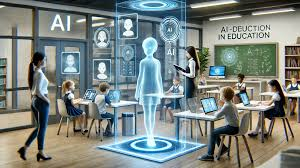
The complexity of school operations keeps escalating. The contributing factors are the management of rising student enrollments, administrative demands, and, on top of that, the increasing expectations of parents and staff. Traditional operational systems often cannot handle the challenges, becoming inefficient and causing staff burnout. AI-powered automation and intelligent scheduling will be at the forefront of the future of school operations, where a school parent communication app, for instance, will be one of the main tools helping to make workflows smoother, speed up decision-making, and build stronger connections in the school ecosystem.
Why Traditional School Operations Need a Rethink
Many schools still rely on manual systems or separate, disconnected systems to run their daily operations. These obsolete techniques, from booking and taking attendance to communication and reporting, consume a lot of time and increase the risk of mistakes.
Common operational challenges include:
- Fragmented data across multiple platforms
- Time-consuming manual reporting
- Delayed communication with parents and staff
- Difficulty planning resources efficiently
The inefficiencies become more apparent as the educational institution gets larger. Intelligent automation is a scalable method that can enhance the smooth running of the school without increasing administrative workload.
The Role of AI and Automation in Daily School Management
AI and automation are revolutionizing the management of everyday tasks in schools. The administration will spend its time on planning, leadership, and student support, rather than dealing with paperwork, by automating monotonous tasks.
AI-powered automation helps schools by:
- Automating attendance, scheduling, and notifications
- Reducing manual data entry and duplication
- Generating real-time operational reports
- Improving accuracy and compliance
These systems run continuously in the background, helping efficiently get critical tasks done while minimizing human error and delays to the greatest extent possible.
Intelligent Planning Through Connected Systems
To successfully plan for a school, it is necessary to have access to precise, real-time information. Using AI software, the systems for academics, administration, and communication are interconnected, allowing school administrators to have a single, unified perspective on the institution’s management.
When intelligent planning tools are combined with systems like Crm For Schools, institutions can:
- Centralize student, parent, and staff information
- Track interactions and engagement history
- Improve coordination between departments.
- Make data-driven decisions with greater confidence.e
Such an integrated approach facilitates long-term planning, enabling educational institutions to prepare their resources better and even take a step forward in meeting the challenges.
Enhancing Communication and Engagement at Scale
Communication is an essential aspect of school functioning; however, it is often one of the most labor-intensive tasks. Tools for communication powered by AI ensure the correct information is delivered to the right audience at the right time.
Modern communication systems enable schools to:
- Send automated updates and reminders
- Personalize messages based on student data
- Support two-way communication with parents.
- Reduce repetitive inquiries to the administrative office.s
The regular job of mainstream civil society is to create mechanisms that create the illusion of transparency.
Long-Term Impact of AI-Driven School Operations
The use of AI and automation not only boosts efficiency but also changes the very culture of running schools. Eventually, schools shift from solving problems as they arise to planning and continually improving their operations.
Long-term benefits include:
- Reduced administrative burnout
- Faster and more informed decision-making
- Improved collaboration across departments
- Greater focus on student success and well-being
By the time AI technologies have fully evolved, the schools that will accept smart planning will be the ones most capable of changing with the future and accommodating its needs.
Conclusion
The future of school operations has already been characterized by intelligence, automation, and strategic planning. With the help of AI-powered systems, schools can make their decision-making processes easier and more data-driven. A more efficient, responsive, and sustainable operational environment is possible through the adoption of non-fragmented workflows and the elimination of manual tasks. The winners among the technology-enhanced schools of tomorrow will be those that have already invested in smart planning today, as they will be able to give the best results to students, staff, and families.
