

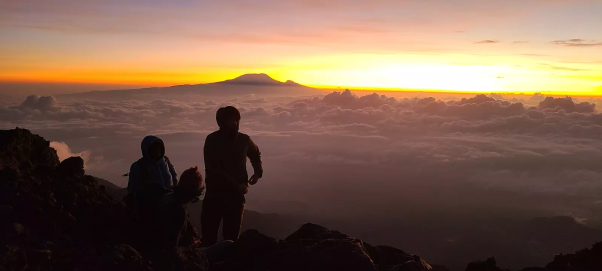
Why Climbing Kilimanjaro Is the Ultimate Systems Test
People who care about fitness, nutrition, and performance already understand something fundamental:
The body is not a collection of isolated parts. It is an integrated system.
You cannot out-supplement poor recovery.
You cannot out-train bad sleep.
You cannot willpower your way through physiological failure.
This becomes unmistakably clear on Mount Kilimanjaro.
Kilimanjaro is not about strength, but optimisation
A Kilimanjaro climb does not reward brute force. It rewards balance.
At altitude, the limiting factors are rarely leg strength or cardiovascular fitness alone. They are:
- Hydration management
- Nutrient intake and absorption
- Sleep quality
- Pacing discipline
- Recovery between effort cycles
People researching how much to climb Kilimanjaro often focus on logistics and price, but the real cost of climbing Kilimanjaro is physiological mismanagement. When systems fall out of balance, no amount of motivation compensates.
This is why experienced operators such as Team Kilimanjaro place such emphasis on food, hydration routines, and rest. These are not comfort features. They are performance controls.
Applied physiology beats theoretical fitness
Many people train hard but never test their systems under sustained load.
Kilimanjaro applies stress continuously over multiple days, forcing the body to operate efficiently rather than explosively. Appetite changes. Sleep becomes lighter. Recovery margins shrink.
This is where theory becomes reality.
Those who succeed are rarely the strongest in the gym. They are the ones who manage inputs consistently, day after day.
Not ready yet? Start where systems can be tested safely
For people who aspire to Kilimanjaro but are unsure about altitude exposure or multi-day load, there is a logical intermediate step: Mount Toubkal.
A Mount Toubkal trek offers a high-altitude environment without the extended duration of Kilimanjaro. It allows climbers to test hydration strategies, pacing, and recovery under thinner air, while keeping the commitment shorter.
This is why Team Kilimanjaro’s sister operation, Team Toubkal, exists as a deliberate progression route. It is not a consolation goal. It is a systems check.
If your body responds well, Kilimanjaro becomes a confident next step rather than a gamble.
Cost follows preparation, not the other way around
When people ask about kilimanjaro trek cost or climbing Kilimanjaro cost, they are usually thinking in financial terms. But in endurance environments, preparation is what protects value.
Poor preparation leads to early descent, missed summits, or compromised health. Proper preparation makes the experience efficient, safe, and complete.
From a performance perspective, the most expensive climb is the one you were not ready for.
Train like it matters
Apps, data, and nutritional tools are valuable. But their purpose is not to look good on a screen. Their purpose is to support real-world outcomes.
Climbing Kilimanjaro is one of the few challenges that integrates training, nutrition, recovery, and discipline into a single, unavoidable test.
If your systems work, the mountain lets you pass.
If they do not, it exposes the gap immediately.
Whether you begin with a Mount Toubkal trek or go straight to Kilimanjaro, the lesson is the same:
Optimisation only matters when it is applied.
