

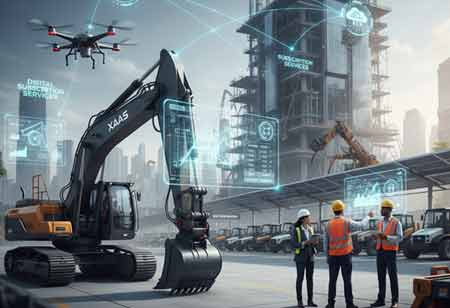
The production area is rapidly embracing intelligent virtual answers designed to streamline complicated workflows and decrease the uncertainties that have traditionally challenged planning teams. As assignment scopes grow greater annoying, guide approaches alone can not aid the accuracy and speed required for regular, exceptional execution. Digital planning engines are stepping in as a transformative pressure, providing included forecasting, real-time updates, and coordinated coordination across each section of production.
These structures bring automation and intelligence into the early decision-making processes, changing guesswork with data-driven clarity. They become aware of potential conflicts, optimize schedules, map out aid utilization, and anticipate delays earlier than they appear. By reading architectural plans and 3D fashions with advanced algorithms, task teams benefit from a comprehensive view of ways a mission will spread. Early-level planning will become some distance more predictable, consisting of tasks including precise material assessments supported by which ensures readability from the very beginning.
How Digital Technology Improves Early Forecasting Accuracy
Digital planning engines are revolutionizing early production forecasting by eliminating the gaps and uncertainties that often arise throughout mission initiation. These structures interpret huge volumes of structural and design facts to reveal material requirements, exertionexexpectationsand scheduling interactions with unparalleled accuracy. The progressed forecasting capability reduces the probabilities of late-degree revisions and strengthens the overall design integrity.
One of the best advantages of this era is its ability to convert complex layout documents into actionable projections in a rely of minutes. In conventional workflows, early planning is slowed down by manual calculations and repetitive critiques. However, with virtual engines processing fashions instantly, designers and challenge managers can focus on refining the satisfactory of decisions as opposed to spending time sorting through records. This shift is crucial for maximizing performance and ensuring that early duties, specifically the ones concerning processes like lumber takeoff, are supported through unique and reliable facts.
Strengthening Communication and Coordination Through Integrated Platforms
Smooth assignment delivery is predicated heavily on powerful communication, but many demanding situations in production stem from old plans, inconsistent updates, and misaligned expectations. Digital planning engines resolve this trouble by using connecting layout systems, scheduling tools, and cost databases into a unmarried, synchronized environment. When one part of a mission is modified, each related device updates automatically, keeping the complete team informed.
The advantage of integration is that planners, architects, engineers, and contractors always operate from the equal shared truth as opposed to isolated files that speedy become old. The resulting clarity prevents problems along with reproduction work, miscounted substances, or miscommunicated timelines. Many agencies enhance this workflow by means of participating with a professional who brings expert perception to interpret digital outputs and ensure that automatic projections remain consistent with real-world construction demands.
The Continued Need for Professional Oversight in a Digital Era
Although digital tools provide speed, consistency, and automation, they cannot absolutely replace the enjoy-primarily based judgment required in construction planning. Algorithms may calculate portions, discover conflicts, or task timelines, but they lack the contextual knowledge that specialists bring, which includes evaluating local building situations, regulatory necessities, or changes in material availability.
Human information is critical for validating automated outputs and making sure that the good judgment in the back of them aligns with realistic construction conditions. Professionals bridge the distance between uncooked data and applied information, adjusting virtual interpretations to mirror subject realities. They verify fee assumptions, determine chance elements, and affirm that fabric projections are feasible within the undertaking’s constraints. Many corporations rely upon a seasoned Construction estimating Company to reinforce this stability and ensure that the virtual planning system remains accurate, intentional, and challenge-equipped.
How External Planning Support Enhances Digital Workflow Efficiency
Outsourcing aspects of the virtual planning method has become an increasingly valuable strategy for creation teams managing complicated or more than one tasks. Digital planning engines generate great facts throughout quantity tracking, value forecasts, and material pathways. Without dedicated professionals to interpret this information, groups face delays and misunderstandings that undermine the benefits of automation.
External professionals assist inner groups by reviewing algorithmic outputs, clarifying inconsistencies, and offering subtle analysis that strengthens decision-making.. Their review allows them to identify issues that computerized systems can also neglect, such as website constraints or exertion boundaries. Outsourced support also accelerates the planning system, ensuring that critical choices are made on time and with complete cognizance of their effect. Many companies depend upon specialized partners presenting Construction estimating services to maintain accuracy and continuity throughout digitally assisted planning levels..
Combining Technology and Expertise for Stronger Project Outcomes
The only approach to digital planning is a hybrid version that blends the efficiency of advanced engines with the insight of experienced experts. This combined strategy results in better precision throughout all planning layers, decreasing the likelihood of remodel, miscalculations, and steeply-priced changes at some point of live production. When algorithms and human know-how work together, tasks benefit from faster planning, greater predictable scheduling, and improved coordination.
Digital engines procedure great quantities of information in seconds; however specialists offer the nuance needed to interpret complex task variables. This partnership leads to higher value control, smoother material coordination, and improved structural reliability. With professional assistance—especially from external carriers supplying Construction estimating services—production groups gain a balanced system that strengthens each virtual accuracy and realistic execution.
The Future of Digital Planning in Construction
The route othe f the production era is apparent: digital planning engines will continue to adapt at a fast tempo. Future advancements are anticipated to include real-time mission simulation, predictive fabric modeling, and synchronized digital twins able to mirror task-website online conditions with first-rate precision. These tendencies will, in additioreduce uncertainties via forecasting capability delays, deliver chain disruptions, and environmental impacts earlier than they arise.
As the generation advances, the industry will continue to transition far from manual processes and in the direction of smart, connected systems that raise the accuracy and predictability of every task level. Construction groups that include this equipment willl benefit bigreatlyn efficiency, price management, and long-term challenge pride.
Final Thoughts
Digital planning engines are getting foundational to how production specialists design, coordinate, and execute initiatives. They rework uncooked information into significant insights, dispose of guesswork, and offer real-time clarity that helps smooth and predictable construction workflows. When paired with professional oversight, digital technology. Dramatically improving accuracy transformation creates an extra efficient construction environment. As the enterprise keeps to adapt, those who integrate virtual planning into their operations can be well-equipped to deal with the growing demands of present-day construction and deliver continuously first-rate results.
Read More:Dimensional 2×6 Lumber Sizes Applied in Building and Remodeling of Home
FAQs
What do virtual planning engines do in production?
They examine assignment information, replace workflows in real time, and assist in extra accurate choice-making all through the development lifecycle.
How do these tools enhance project predictability?
They monitor conflicts early, reduce manual errors, and provide instantaneous updates that keep teams aligned and knowledgeable.
Can small corporations use digital planning engines effectively?
Yes. These systems scale without difficulty and assist smaller companies in performing with greater accuracy and efficiency.
Does digital equipment eliminate the need for estimators?
No. They automate calculations, but human estimators continue to be critical for decoding effects and adapting them to real-world situations.
Will virtual planning engines become general throughout creation?
Yes. As the era continues to adapt, those structures become crucial to fashionable constructioplansns and execution.
